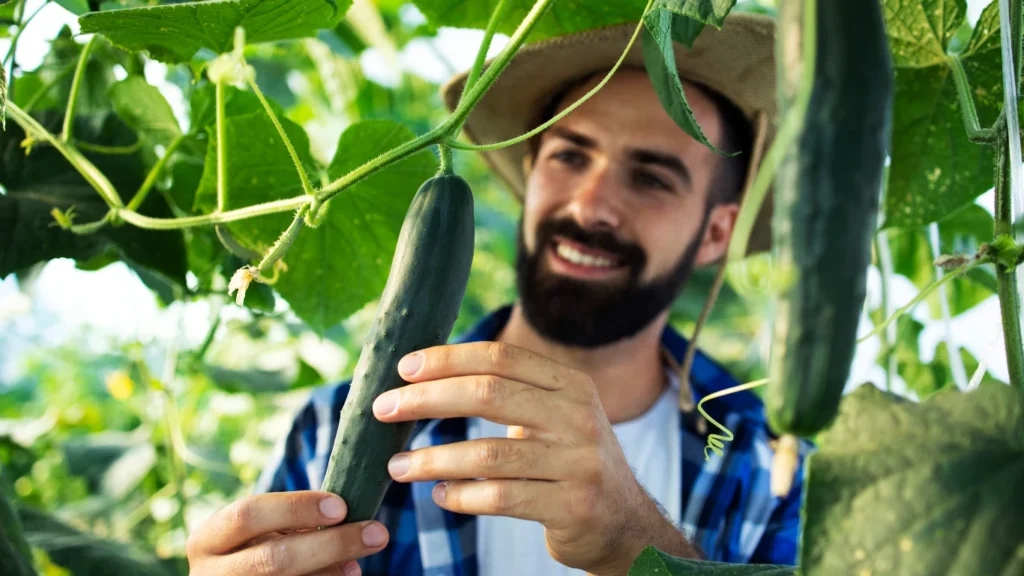
Greenhouse cucumber cultivation requires control over several variables-namely temperature, humidity, irrigation, and nutrition-according to the needs of the crop. In contrast with growing cucumbers in the field, a greenhouse system can insulate crop production from unwanted external climate conditions and at the same time promote a consistent climate profile that favors uniform growing conditions.
Temperature and humidity, of all of these aforementioned parameters, appear to have particularly robust effects on cucumber plant development, bloom and fruit-setting, and pest management. These climate factors can either make or break greenhouse cultivation for this specific crop.
Warm-season cucumber crops thrive in reasonably warm and consistent climates and settings. Between 21C-26C (70F-80F) has been reported to be optimal for cucumbers in both vegetative and fruiting development. Cucumbers are quite tolerant to fluctuations in both higher and lower temps but may be stressed and thus produce at an abnormal rate/fashion with continued exposure.
Climate control must also be practiced for individual growth stages of cucumbers; for example, from germination stage to when sprouts appear, cucumbers perform equally well between ~15C and 29C and higher growing mediums tend to foster quicker seed growth compared to others. It is also critical that greenhouses remain at steady temperatures due to how sensitive cucumber plants can be to variable atmospheric conditions; the greenhouse must use some system or practice that produces controlled heated, cooled, or aired conditions.
It may appear that humidity has similar growing criteria at both morning and at night. Cucumber greenhouses should typically remain at ~60-70%RH during the day and can also handle slightly higher temperatures (~70-85%RH) over the nighttime periods in their growing environment, although never so high as to cause the dew to reach its dew point. Extremely low or high humidity can contribute to various issues in cucumber production.
While low relative humidity causes the rate of transpiration to accelerate, extremely high percentages have a negative affect upon it, thus slowing down nutrient uptake and creating an optimal environment for mold. Growers should aim for optimum humidity (the above ranges) and not for extreme humidity levels. The best approach is a continuous maintained state of hydroponically and atmosphereically suitable conditions for cucumbers.
Relative humidity alone is not always the best indicator for how much transpirative work a plant is doing, nor what it may need help with; it is however one aspect considered when measuring vapor pressure deficit, also known as VPD. The cited references have suggested a range of roughly 0.75-1.35 kPa for midday cucumber crops and a range from 0.35-1.0 kPa for night crops of cucumbers grown indoors.
Greenhouse plants release a tremendous amount of moisture through their foliage, termed transpiration. As these cucumbers increase in size, and particularly as dense foliage covers the plants, the moisture they naturally exude can become highly concentrated within the greenhouse.
Unchecked condensation at such levels fosters unwanted moisture dependent growing situations, such as powdery mildew and botrytis. Increasing airflow will serve to more evenly distribute the transpiration throughout the cucumber crop as well as allow moisture to spread rather than concentrate upon sections of the plants.
Controlled cucumber systems require more than just the proper atmospheric setup; a root system, or some type of hydroponics in which to place the plants, is required for greenhouse production. Cucumber grow bags contain specific growing mediums which will give the growers more options than if they had to rely on soil variability from field growing
environments.
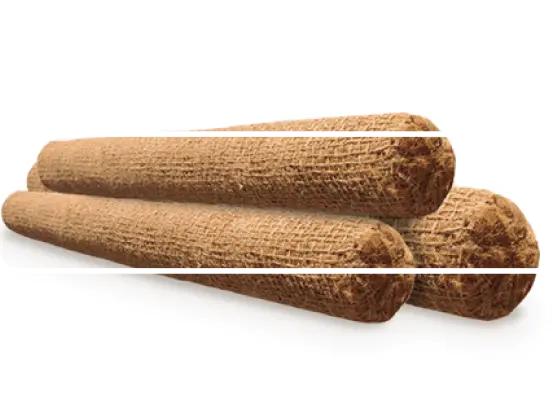
Coco coir can offer great benefits for grow bags by retaining moisture while still holding much of the aeration around the roots which cucumber plants require. While ensuring irrigation is precise, this also prevents over-saturation of the soil and will benefit cucumber hydroponics at large.
The grow bag material, as well as coir particles, should be designed with the greenhouse, growing mediums, and specific production system requirements of that specific crop in mind to allow for adequate drainage.
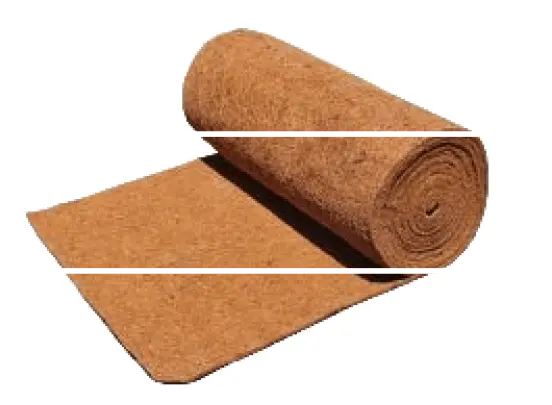
Coco coir substrates: not every growing medium is comprised the same way; different types of coir substrates contain different particles, ratios of fiber and buffer, moisture retention, as well as air pore and drainage abilities depending upon the mixture, brand, and product.
When deciding on “coir products” for a specific cucumber grow system greenhouse producers should understand that different soil combinations suit different irrigation and climate setups. Coarser fiber coco mediums typically drain better than finer particle media but yield a lower retaining ability for moisture.
It is extremely important that any substrate choice allow for uniform and predictable watering/feeding throughout-and ideally be of a consistent structure to encourage predictable product delivery for all greenhouse occupants.
While climate appears to be king, it may surprise you to hear that temperature and humidity should not be considered on their own, apart from the other two variables: Irrigation and nutrition. Depending on your irrigation system, cucumber watering can be monitored extremely accurately depending on whether the climate controls of the greenhouse or the actual state of root growth is influencing crop behavior. PH, EC, and a combination of drain and moisture levels can monitor your fertigation program.
The keys to this is to focus on the other parameters while managing for temperature and humidity so the crop may thrive. Instead of one climate ideal, consider all influences and how each interacts with the others. With an effective and properly constructed coco fiber based growing medium-it should be that your cucumber crop will have more consistent soil content due to the factors in step 4!
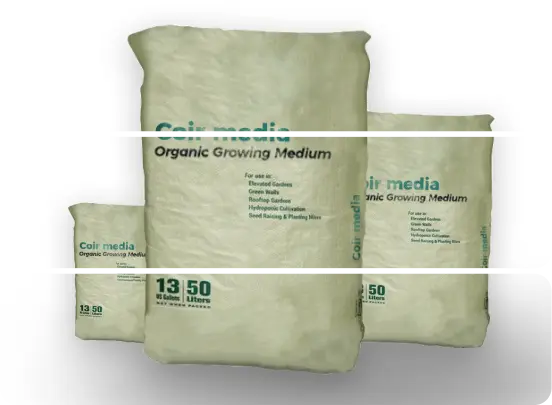
Coco coir can become a significant aspect for indoor hydroponic growing production. CoirMedia products will help create ideal root environment based upon a specific crop needs which the cultivator is trying to provide for. When considering using your specific cucumbers this product can potentially do as much of your soil as anything else when combined with the proper bag and irrigation system.
Cucumbers rely heavily on suitable growing temperatures and humidity levels within the greenhouse to grow most effectively. Maintaining appropriate temperatures can be anywhere from 21C-26C, though optimal night time conditions can tolerate higher percentages ranging up to 70-85%RH. Air movement combined with water drainage can help eliminate many unfavorable humidity conditions.
Utilizing specific growing mediums like coco coir will help to control moisture and air content of the root systems in your cucumber grow bags.
Overall successful hydroponic production relies on the proper execution of multiple facets all to best benefit the growing crop.

Mathew is a product designer and engineer at Coirmedia, where he combines his passion for sustainability with his design and engineering expertise. He develops innovative coir products that are not only functional but also eco-friendly. Driven by a desire to share his knowledge, Neil is passionate about writing and teaching, aiming to educate others about his ideas, innovations, and the technology behind them.