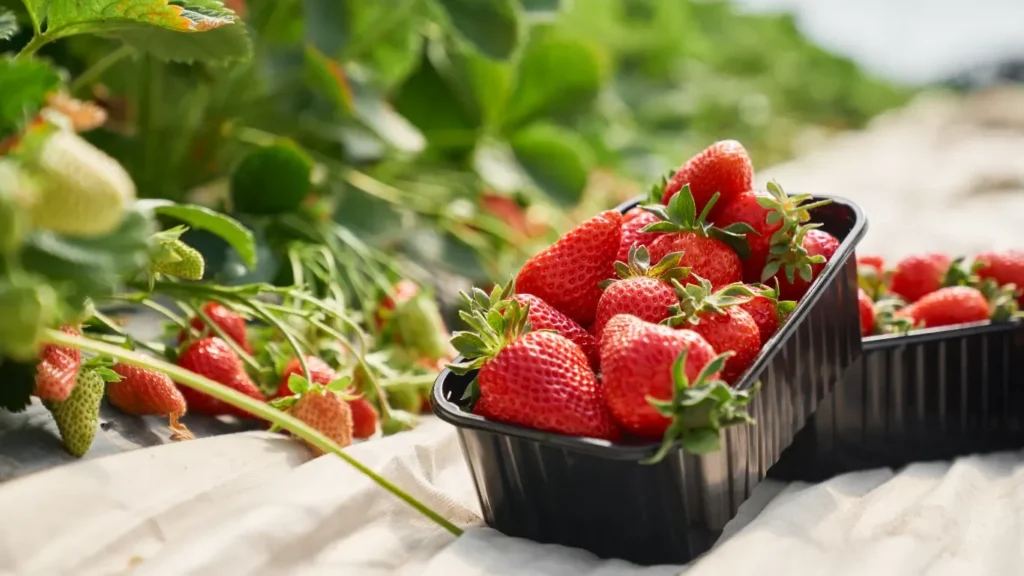
Strawberry cultivation is becoming increasingly technology-driven as commercial growers look for better ways to improve productivity, manage resources, and maintain consistent crop quality. Traditional soil cultivation can present challenges such as soil-borne diseases, inconsistent soil conditions, and difficulties in controlling water and nutrient availability.
Coco coir substrate is emerging as an effective solution for professional strawberry production, particularly in greenhouses and hydroponic systems. Its ability to combine water retention with good aeration gives growers greater control over the root environment while supporting consistent crop development.
Soil-based strawberry production can be affected by several factors that are difficult to control. Soil-borne diseases, nematodes, inconsistent soil structure, and variations in moisture can affect crop performance from one growing cycle to another.
Heavy rainfall can also influence the root-zone environment, while poor drainage may create conditions that affect healthy root development. For professional growers, maintaining uniform conditions across a large cultivation area is essential for achieving consistent yields and fruit quality.
Soilless cultivation provides an alternative by reducing dependence on naturally variable soil conditions and allowing growers to manage the root environment more precisely.
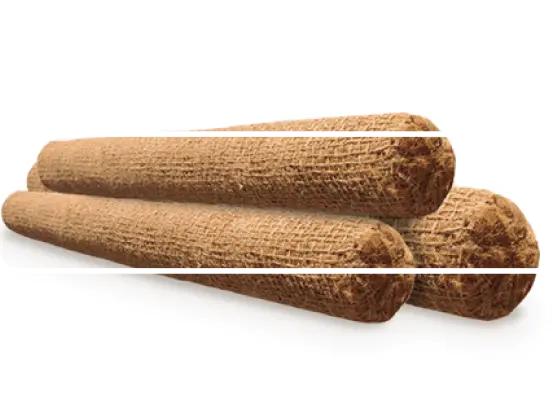
Coco coir is produced from coconut husks and has become an important growing medium for soilless agriculture. Its physical structure allows it to retain moisture while maintaining air-filled spaces around plant roots. This balance is particularly valuable for strawberries.
The plants require sufficient moisture for healthy growth, but excessive water around the roots can reduce aeration and negatively affect root health. A properly processed coco coir substrate provides a relatively uniform growing environment.
Its renewable origin also makes it attractive to growers looking for more sustainable alternatives to conventional growing media.
Not all coco coir substrates have the same characteristics. Particle size and composition influence the way a substrate handles water and air. Coarse coco chips can increase air porosity and drainage, while finer coir pith generally provides greater water retention.
By combining different particle sizes, manufacturers can create substrates with properties suited to particular crops and growing conditions. For strawberries, the ideal balance depends on factors including climate, greenhouse conditions, irrigation frequency, and crop requirements.
A substrate that works well in a dry environment may require a different composition in a humid climate.
Strawberry grow bags are an important part of professional strawberry production systems. The dimensions, volume, and structure of the bag can influence the root-zone environment and determine how the substrate responds to irrigation. A properly designed grow bag allows roots to access sufficient moisture while maintaining drainage and aeration.
Growers can also position bags at convenient heights, making harvesting and crop maintenance easier. The combination of grow bag, substrate, irrigation, and fertigation should therefore be considered as a complete growing system rather than as separate components.
One of the major advantages of using coco coir in hydroponic strawberry production is the increased control over irrigation and nutrition.
Growers can adjust irrigation frequency and nutrient delivery according to the crop’s development stage.
Parameters such as pH and electrical conductivity (EC) can also be monitored and managed as part of a controlled fertigation programme. Strawberries have changing requirements throughout their growth cycle.
Their needs during establishment differ from those during flowering and fruit development. A controlled substrate system allows growers to make adjustments based on plant requirements and root-zone conditions.
Monitoring drainage can also provide useful information about water and nutrient management, helping growers refine irrigation strategies and avoid unnecessary resource consumption.
A healthy root system is fundamental to successful strawberry production. Coco coir can provide a combination of moisture availability and air-filled porosity that supports root development. Compared with variable field soil, a consistent substrate can help create more uniform conditions throughout the cultivation area.
Proper drainage is also important because maintaining sufficient oxygen around the roots can support healthier plants. When combined with appropriate irrigation and fertigation, coco coir can create a controlled root environment suited to intensive strawberry production.
Professional strawberry growers are increasingly interested in cultivation systems that provide predictable crop performance.
Controlled greenhouse systems using coco coir allow growers to manage several factors that influence plant growth.
Temperature, humidity, irrigation, nutrition, pH, EC, and root-zone conditions can all be monitored and adjusted.
This level of control can contribute to more uniform plant development and help growers maintain consistent production. Elevated growing systems can also improve working conditions by positioning strawberry plants at a more convenient height for harvesting and crop maintenance.
The quality of the substrate has a direct influence on the performance of a soilless growing system.
Growers and distributors should therefore select an experienced coir product manufacturer capable of delivering consistent physical and chemical properties.
Important quality parameters include particle size, moisture content, pH, EC, water-holding capacity, aeration, and drainage. Proper washing and buffering are also important for preparing coir substrates for sensitive commercial crops.
Consistency is especially important for large-scale strawberry farms because variations between batches can affect irrigation and fertigation management.
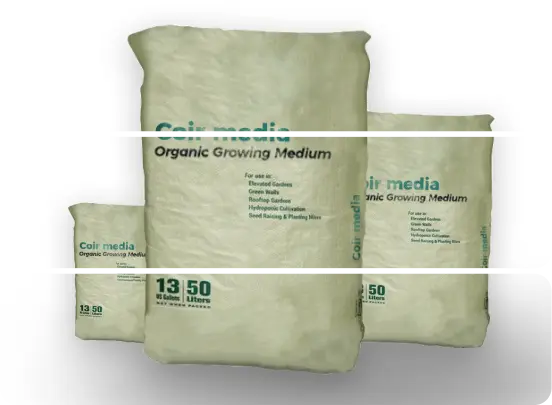
CoirMedia provides coco coir substrate solutions for professional growers and horticultural businesses. Its coir products are designed for applications including greenhouse cultivation, hydroponics, and high-value crops such as strawberries.
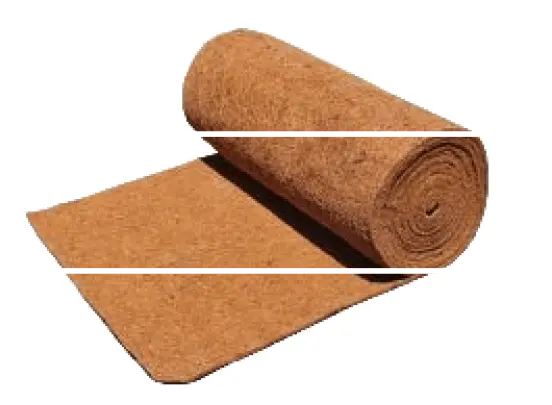
Depending on the production system, different coir formats and blends can be selected to achieve the desired balance between moisture retention, aeration, and drainage.
By focusing on controlled processing and product consistency, CoirMedia supports growers seeking dependable growing media for modern commercial agriculture.
The continued development of controlled-environment agriculture is creating new opportunities for coco coir substrates in professional strawberry farming. As growers seek better resource efficiency, greater control, and more sustainable cultivation methods, soilless systems are becoming increasingly attractive.
Coco coir’s versatility allows it to be adapted to different climates, irrigation strategies, and crop requirements. This makes it suitable for commercial growers looking to move beyond traditional soil cultivation.
Professional strawberry production is increasingly moving toward cultivation systems that provide greater control over the root environment.
Coco coir offers an effective combination of moisture retention, aeration, drainage, and adaptability, making it a valuable substrate for greenhouse and hydroponic strawberry production. With the right substrate composition, grow-bag design, irrigation programme, and fertigation strategy, growers can create a more consistent environment for healthy plant development and quality fruit production.
As sustainable and controlled cultivation continues to expand, high-quality coco coir substrates are positioned to play an increasingly important role in the future of professional strawberry farming.

Mathew is a product designer and engineer at Coirmedia, where he combines his passion for sustainability with his design and engineering expertise. He develops innovative coir products that are not only functional but also eco-friendly. Driven by a desire to share his knowledge, Neil is passionate about writing and teaching, aiming to educate others about his ideas, innovations, and the technology behind them.