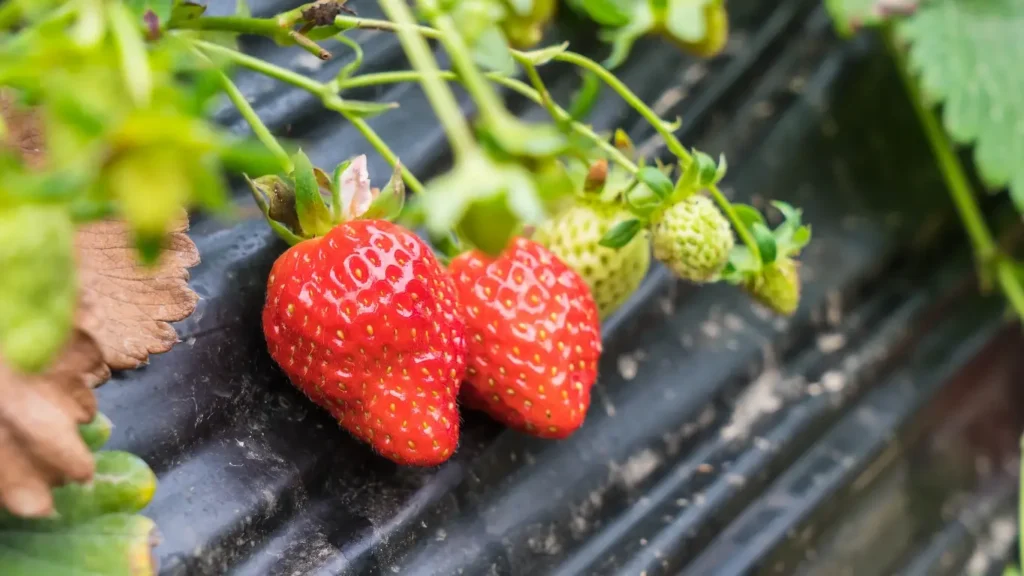
As fresh strawberries are sweet, tangy, aromatic, and juicy, all the natural qualities are present. However, even well-cared-for strawberries may be bland, watery, or sharper than anticipated. Several considerations, such as the strawberry variety, ripeness at picking, temperature and environment during growth, management of water levels, and post-harvest practices, impact strawberry flavour.
But for commercial growers, enhancing the quality of the strawberry begins well before they reach the supermarket shelves. Establishing a stable root-zone environment, adopting a precise irrigation strategy, choosing the correct variety and harvesting early will all go a long way towards delivering superior fruit.
Naturally, all strawberries are not created equal when it comes to sugar levels, flavour strength, acidity and aroma. Some strawberries are excellent for fresh eating while some others make great processing or preservation varieties.
Therefore, selecting a variety based on its target market is an important first step. Growers should take into account more than just yield and production characteristics; they should also take into consideration the flavour of the variety.
You can’t force taste in a poorly managed crop a variety that doesn’t reach your expectations.
Fruit is a critical factor in having good flavour. While some fruits develop their flavour after they are picked, strawberries do not; once they’ve been harvested, they will not ripen any further.
Growers need to define picking criteria for fruit based on colour, firmness and variety, as well as market needs. Picking fruit at the required stage of maturity can easily make the difference in achieving improved levels of sweetness and flavour.
For fresh-market strawberries, yield must be balanced with shelf-life and freight.
Water management is also critical for strawberry quality. Too much water in the root zone can lead to waterlogged conditions, and too little irrigation can stress the plant.
The reference source also mentions that strawberries are susceptible to becoming watery due to high moisture levels in handling and washing.
In the production environment, cultivation practices can promote more uniform growth by selecting a growing medium that retains an adequate amount of water yet drains well when necessary. Coco coir plays a significant role in this kind of system because it has a physical structure that provides water retention as well as good aeration and drainage. Coir Media’s strawberry systems are built around these root-zone properties.
A healthy plant is the root of quality fruit. For good water and nutrition supply, roots have to be properly oxygenated in the growing media.
Because of the coir structure, coco coir can give a fairly uniform root zone, if correctly selected and managed. Different coir structures are available to varying degrees that can be employed to modify both water-holding capacity and aeration to suit the crop and irrigation approach.
In close consultation with an expert coir products manufacturer, growers have the opportunity to choose between different formats of coir and coir mixtures: according to the type of crop, greenhouse conditions and irrigation procedures and not according to a standard substrate.
Temperature and weather also impact the flavour of strawberries. As the reference article says, “Lower temperatures or reduced sunlight levels will slow sugar production in fruit and result in a tart or less intensely flavoured fruit.”
On the other hand, commercial growers are affected the most by the inconsistent climate inside the greenhouse. They can better observe the temperature, humidity, ventilation, and light to be able to control the environment.
Environmental control may not be able to produce a consistent flavour, but reducing the excess variation can ease the growing conditions of plants.
Apart from the farming itself, post-harvest handling has an impact on how strawberries are eaten. They are all imported fresh and, as this fruit is perishable, the flavour deteriorates with ageing.
Processing berries soon after harvesting will help to retain the fruit’s fresh qualities. For the consumer, allowing refrigerated strawberries to reach room temperature before eating can enhance their aroma and flavour.
Thus, for commercial producers, it is vital to have the cold chain optimised and eliminate long waits between harvest, pack, and ship.
The fruit can take up water while washing, which means that if you don’t dry them thoroughly, it can make the eating experience even more watered down.
If eaten fresh, strawberries must be handled carefully to prevent damage and washed as late as possible before eating, in order to maintain the full texture, appearance, aroma, and flavour of the fruit.
Strawberries are easily grown in a variety of off-ground systems and offer growers more control of the environment. Grow bags give the ability to better control the amount of media, water, drainage, and root-zone environment compared to variable field soil.
According to growers evaluating the “best” strawberry grow bags, the ultimate decision should hinge on crop type, greenhouse environment, watering frequency, bag size, and structure of the substrate, not the grow bag itself.
Of course, not every single strawberry will end up being as sweet as another strawberry during production even if conditions are closely monitored. Thankfully, many different ways to boost the flavour are achievable post-harvest.
Room temperature strawberries will release their fragrance. Berries that are not sweet enough should be macerated with sugar to allow them to release some juice and improve their flavour. Citrus, fruit juices, and other ingredients may help to lift plain berries.
Roasting and dehydration are other options because, by reducing the water content, the juice will become concentrated.
Consistent flavour driven by your crop management, Coir Media offers a range of coir-based growing media for strawberries – from crop-specific grow bags to a range of coir-based substrates based on moisture control, aeration, drainage, and root development.
Ultimately, by selecting the right substrate and combining it with disciplined irrigation, climate management, variety choice, and picking at the right time, the grower can optimize conditions for the production of strawberry fruit with the best possible flavour and quality.
Enhancing the taste of fresh strawberries isn’t a single technique. Variety choice, harvest maturity, sunlight, climate, irrigation, root health, and handling during and after harvest all influence the flavour.
How can growers produce commercially? Commercial growers aim for a uniform crop from root zone to harvest. Well-sorted coco coir, well-designed grow bags and adequate water and fertigation management will help.
In the end, higher quality taste begins with healthy plants and is sustained through careful handling. Growers can influence crop quality and build a better foundation for a sweet, fragrant, tasty strawberry.

Mathew is a product designer and engineer at Coirmedia, where he combines his passion for sustainability with his design and engineering expertise. He develops innovative coir products that are not only functional but also eco-friendly. Driven by a desire to share his knowledge, Neil is passionate about writing and teaching, aiming to educate others about his ideas, innovations, and the technology behind them.