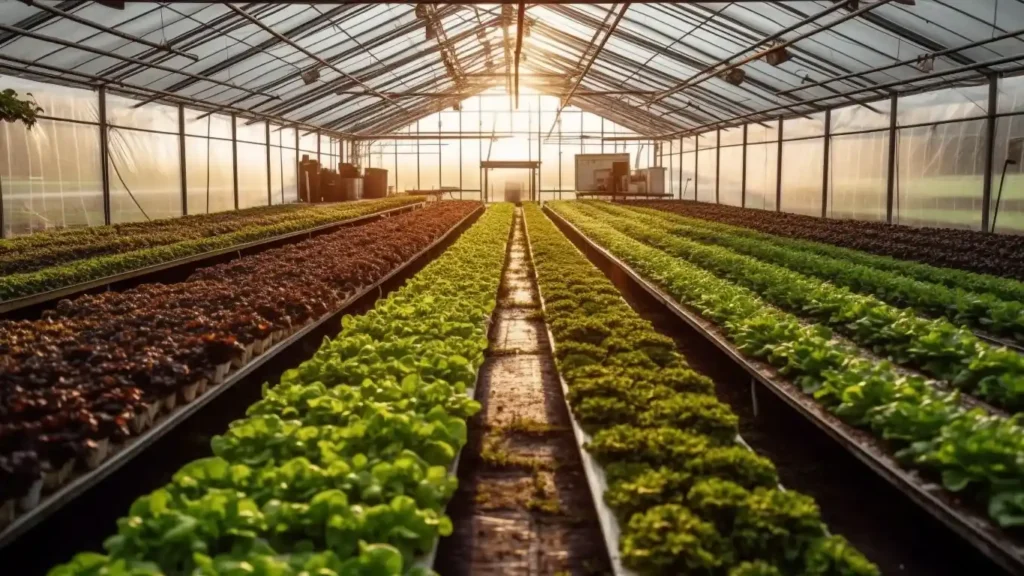
Modern agriculture is rapidly moving toward controlled, technology-driven cultivation. With land and water resources under increasing pressure, farmers are looking to maximize their crop yields from a limited area while maintaining high quality. Modern greenhouses, especially those which employ hydroponic and soil-less cultivation methods, are well-positioned to answer these challenges.
It is important to note that a 10-fold yield increase is not a universal characteristic of every crop and farming system grown under cover, although recent greenhouse and hydroponics experiments under the right conditions have revealed some astonishing yield gains. It has been observed in hydroponic growing systems under optimized conditions that there are indeed substantial increases per area. One particular comparison research, which compared hydroponically-grown and traditionally-grown lettuce, determined that their hydroponic system output was approximately 11 times greater than their soil-based comparison crop, under those specific circumstances, not including factors such as labor productivity.
Traditional farming heavily depends on unpredictable external factors such as amount and timing of rainfall, significant temperature swings, susceptibility to various pests and diseases as well as soil quality which can vary on every acre. By bringing plant growing indoors with the use of a modern greenhouse, many variables impacting crop growth can be controlled and optimized.
Growers can control:
These environmental controls can ensure that the plants receive resources at exactly the moment they are required at optimized consumption levels which in turn results in more consistent growing conditions.
Modern greenhouses also have more cycles per year when contrasted with outdoor and conventional farming methods. It’s been shown through research when controlled-environment hydroponics has been used as a comparative tool against conventional horticultural practices the yield benefits gained in using controlled environment horticulture has generally increased yield considerably however the exact level depended upon the cultivar used and production system.
One of the key advances in modern greenhouse farming is the progression to hydroponics and alternative soil-less growing mediums. Hydroponics allows the roots of a plant to draw nutrients from and be support in water and nutrient solution rather than relying on traditional agricultural soil. Hydroponics involves holding roots suspended, or supported in a neutral medium that allows farmers to control its moisture content, drainage rate and air to root ratio.
As with traditional farming methods where soil quality depends greatly upon nutrient content and its inherent structure, even soil-less growing mediums need good water content as well as excellent levels of aeration.
This is why growers prefer substrates such as coco coir for the same reasons of maintaining appropriate water and air content within the root zones of their crops. It has been demonstrated that one study compared hydroponic and conventionally-grown greenhouse lettuce yields where there was a 134.3% increase in yield and a water productivity increase of over 50%. This study just clearly illustrates what modern controlled environment horticulture is helping growers to achieve.
Maximizing usage of your farming space is likely a very important factor when deciding whether or not to invest in greenhouse horticulture. When a crop is sown too close the yield may not come on properly, therefore at optimal densities it is feasible to consider planting with less spacing that with an traditional open environment, or also by adding more growing-levels to support vertical growing methods for relevant crops.
With appropriate spacing a level seed bed with uniform crop rows will provide plants with identical, predictable conditions and the convenience for irrigation and fertigation systems to be placed optimally as well. Through efficient plant spacing of high-value crops such as tomatoes, peppers, cucumbers, strawberries, flowers, and green leafy vegetables one gains a significant boost to output within a confined area.
The substrate used is an important component of the soil-less production systems currently employed in horticulture. As this means that it will largely carry the responsibility of the plants roots system’s water absorption, storage and overall function, its suitability can make an important difference to the efficiency with which plants grow. Coco coir mediums are capable of holding a healthy amount of water while ensuring there is sufficient space for root aeration.
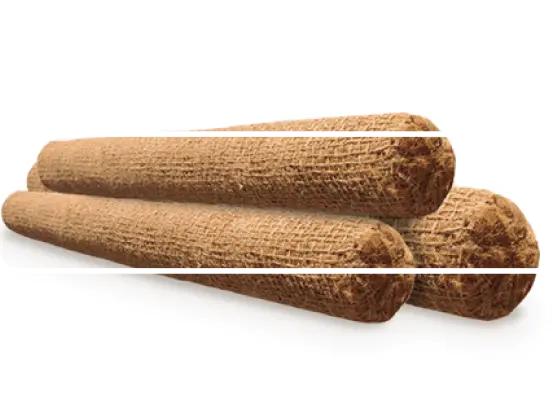
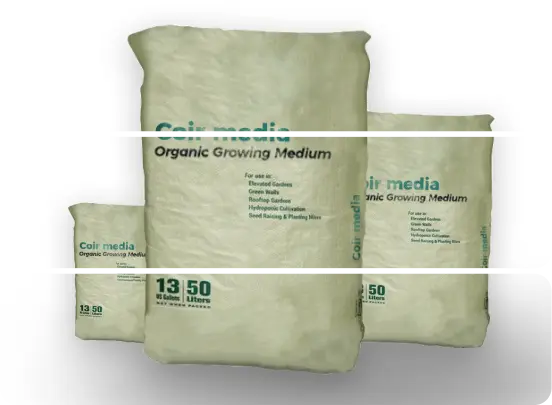
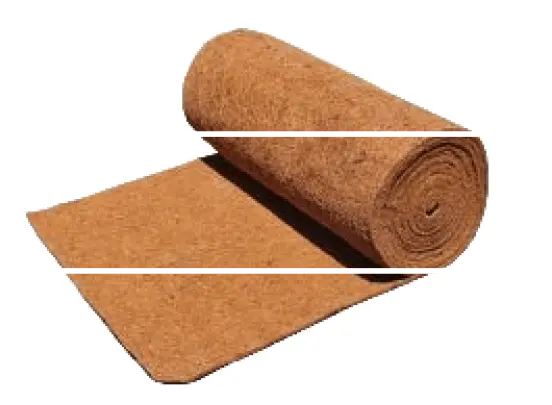
Available in a variety of formats to suit crop specifications, some are supplied ready-to-use grow-bags or slabs and some come in pressed coir block form for efficient storage and transport, only requiring hydrated when ready for use as a substrate.
These are useful substrates which can provide excellent crop production such as peppers, cucumbers, tomatoes, strawberries or flowers.
Modern greenhouses aren’t only producing more simply by using more water and fertilizer; instead the way water and nutrient inputs are delivered can increase efficiency significantly. Using hydroponic systems, a grower can optimize what goes to the roots by using a fertigation system which can delivers nutrients directly to the roots in specific required concentrations, and once spent can sometimes even be recycled.
These efficient watering systems make a huge impact on water productivity. Comparing one hydroponic with conventionally-grown lettuce experiment as referred to previously, yielded a reduction in total water required per kg for hydroponically produced crop by over 8.6 times.
A plants roots is the system which feeds its fruiting process and overall health therefore providing the very best conditions at the root zone would be highly important for achieving the full potential of a given crop. Conventional soil can produce a vastly different soil mix at different places in the bed itself due to a wide number of reasons such as varying levels of aeration, compaction of structure and water-logging for example.
Soil-less mediums on the other hand gives controlled conditions at the root zones such as coco coir which hold sufficient water yet possess ample pore space for aeration. Manipulating water application frequency/drainage rate, pH and EC all contribute to making the crop perform optimally.
Even if one achieves a more productive output from a crop there will be little profit if its quality cannot be maintained; so there may be more productive yield within the greenhouses but the produce does not have the quality that a demanding market requires. In modern controlled systems everything is considered; temperature fluctuations in the greenhouse do not cause plants to grow with a variable yield that fluctuates greatly, but rather steadily throughout their productive phase.
The precise management of such factors as temperature, humidity, humidity, water and fertilizer can give produce that is consistent in its appearance, the size of the harvest and flavor.
Recent greenhouse research studies are proving to show increased levels of water and nutrients productivity when using controlled hydro-cultures vs soil horticulture though it is imperative that one is not looking to achieve very high yields in soil; each aspect plays a great role in what you grow and the quantity in which you can produce it (i.e. Climate, substrate, growing environment and how well the crop is managed).
It can be concluded that for today’s growing demands within agriculture the integration of controlled environments with advanced soil-less production methods that incorporate hydroponics and quality substrates could lead growers towards producing in greater volumes using lesser amount of water & fertilizer and achieving a higher return.
However this means one requires a significant initial outlay that the cost of traditional farming will not necessitate with higher outputs often being realized in smaller crops and the capital intensive nature of such investments being borne from projected increases in profitability and efficiency of crops. Selecting appropriate crops for growth, and ensuring that all elements from the greenhouse environment to the management of irrigation & fertilization are conducted correctly is an overall approach.
As the greenhouses continually are developing, efficient growing substrates must also follow closely to meet such evolving needs. Coco coir can offer to its growers such suitable, high quality mediums and their delivery systems will only further increase the capability and output from controlled environment horticulture to provide greater efficiencies than traditional farming alone ever could support and to encourage growth in modern growing applications for various commercial horticultural producers.
Coco coir products of all forms would surely benefit from a growers desire for consistent and optimized root-zone environment and therefore also contributing greatly to the success of hydroponics and commercial greenhouse growing where efficient use of land resources is maximized.
Modern greenhouses can dramatically outperform traditional soil farming in productivity under the right conditions. The potential for 10× or greater yields is particularly associated with certain crops and intensive hydroponic or controlled-environment systems rather than being a universal result.
The real advantage comes from combining multiple technologies: environmental control, precision irrigation, fertigation, optimized plant density, and high-performance growing substrates.

Mathew is a product designer and engineer at Coirmedia, where he combines his passion for sustainability with his design and engineering expertise. He develops innovative coir products that are not only functional but also eco-friendly. Driven by a desire to share his knowledge, Neil is passionate about writing and teaching, aiming to educate others about his ideas, innovations, and the technology behind them.