Commercial hydroponic farming in Mexico has absolutely exploded over the last ten years. And honestly? It makes total sense. The country’s basically perfect for this kind of agriculture.
Think about what Mexico’s got going for it. Year-round sunshine in most regions. The U.S. market sitting right next door—one of the biggest produce buyers on the planet. Plus, there’s been massive investment flowing into agricultural technology lately. Water’s scarce across huge chunks of the country, and good farmland? Getting harder to find. Soilless cultivation solves both headaches at once.
Hydroponic farming flips traditional agriculture on its head. Plants grow without any soil at all. Sounds crazy until you realize what plants actually need from dirt—nutrients, water, oxygen, and something to anchor to. That’s literally it.
Strip away the soil and deliver those essentials through nutrient-loaded water instead. Boom. Plants get exactly what they need, right when they need it. No more root systems spreading out desperately searching for food. Everything’s right there, available 24/7.
Building a working hydroponic setup isn’t overly complicated, but certain pieces are non-negotiable. Need a growing medium—coir products, perlite, or clay pellets usually do the trick. Then there’s the nutrient solution where all the plant food lives. A delivery system moves water where it needs to go. Lighting matters too, whether natural sunlight or LEDs. Roots need oxygen, so aeration’s critical. Temperature and humidity controls round things out.
Get these working together smoothly, and plants just go crazy.
The hydroponic farming advantages explain why Mexican farmers are switching over like wildfire. This goes way beyond just growing plants differently—it’s fundamentally better agriculture.
Water usage drops by 90% compared to traditional farming. That’s not a typo. Ninety percent less water. In regions dealing with drought and depleted aquifers, this matters enormously. Systems recirculate everything in closed loops. Plants absorb what they need, unused water flows back to the reservoir. Zero waste.
Plants mature somewhere between 30-50% faster than soil-grown crops. The reason’s pretty straightforward—they’re not burning energy building massive root systems to hunt down nutrients. That energy redirects into producing leaves, stems, and fruit instead. Faster growth means quicker harvests and money coming in sooner.
This is where jaws drop. Growers consistently report yields running 3-10 times higher on identical land areas. Same space, potentially ten times the tomatoes. Those aren’t marketing numbers—that’s what actually happens when growing conditions stay dialed in perfectly year-round.
Soil naturally harbors pests and diseases. Always has. Remove soil from the equation, and pest pressure plummets immediately. Add some physical barriers keeping flying insects out, and pesticide use becomes minimal or disappears entirely. Cleaner produce, safer working conditions, and exports that breeze through international inspections.
Land costs serious money, especially anywhere near cities. Hydroponic setups pack substantially more production into each square meter. Go vertical with stacked systems, and the math gets absolutely wild—multiply growing capacity without expanding the physical footprint at all.
Nature does whatever it wants outside. Inside a protected hydroponic facility? Growers control everything. Mexican farmers now harvest consistently year-round regardless of what’s happening with seasons or weather. Restaurant buyers and distributors love that reliability—no gaps in supply, no quality fluctuations.
Hydroponics vertical farming pushes efficiency even further by stacking growing layers upward. Urban areas with limited space? This approach changes everything.
Towers, A-frames, wall-mounted panels—plenty of ways to build vertically. Production capacity jumps anywhere from 5-20 times compared to horizontal layouts. High-value crops that don’t need massive root zones—lettuce, herbs, strawberries—absolutely thrive in vertical configurations.
Mexican cities are embracing this hard. Empty rooftops becoming productive farms. Abandoned warehouses converted into growing facilities. New purpose-built operations popping up in metropolitan areas. Food production happening right where people actually live cuts transportation costs and carbon emissions while keeping produce incredibly fresh.
Modern vertical farms run on impressive technology. LED systems precisely tuned for photosynthesis. Nutrient delivery adjusting automatically based on plant needs. Climate control maintaining perfect conditions around the clock. Monitoring platforms tracking every metric imaginable. Pretty far removed from traditional farming, but results justify the investment.
Mexican agricultural authorities recognize hydroponics can address food security and economic development challenges. Government grants for hydroponic farming have become genuinely accessible through multiple programs.
SAGARPA (Secretaría de Agricultura y Desarrollo Rural) backs technology adoption with real funding. Their “Programa de Fomento a la Agricultura” covers 50-70% of infrastructure costs for qualifying projects—yes, including hydroponic systems. That changes the math completely for farmers without massive capital reserves.
Individual states layer additional programs on top of federal support. Sinaloa, Jalisco, Baja California—they’re providing supplementary funding, technical assistance, and training programs. Each state customizes support based on local priorities and challenges.
Accessing government money requires some legwork. Need a solid business plan proving financial viability. Technical feasibility studies showing the concept works. Land ownership documentation or lease agreements. Demonstrated commitment to sustainable practices. Small-scale farmers and cooperatives often get priority consideration, which seems fair.
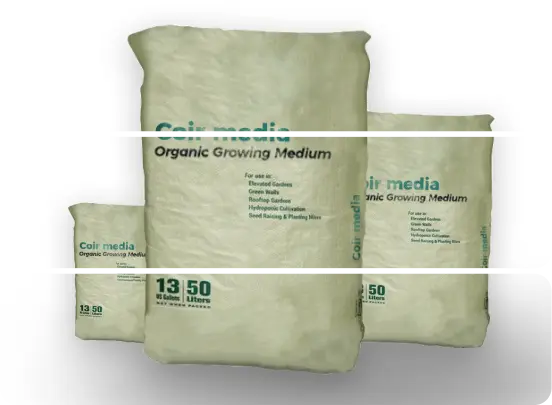
Choosing the right growing medium determines success or failure. This isn’t an area to cut corners. Working with a reliable Coir Product Manufacturer in Mexico ensures access to quality substrates providing proper root support, moisture retention, and aeration.
Coconut coir has become the standard for tons of Mexican operations. Made from coconut husks—totally sustainable and renewable. Water retention? Excellent. Drainage? Perfect. Aeration? On point. pH-neutral, resists compaction, and can be reused across multiple growing cycles. Pretty tough to beat that combination.
Different crops need different container configurations. Can’t just use identical setups for everything.
Tomato grow bag systems provide the volume and drainage those big indeterminate varieties demand. Tomato roots spread extensively. Bags typically range from 10-20 liters, offering stability for tall plants while ensuring nutrients stay accessible throughout the entire growing season.
Cucumber grow bag setups accommodate rapid growth and intense water demands. Cucumbers are incredibly thirsty plants. Medium-sized bags around 8-15 liters handle greenhouse cucumber production beautifully. Mexico exports massive cucumber volumes, so nailing this matters financially.
Strawberry grow bag systems enable efficient berry production whether arranged horizontally or vertically. Smaller bags—3-5 liters—suit strawberry root systems perfectly while allowing dense planting patterns that maximize yield per square meter.
Quality potting mix combines coir with perlite, vermiculite, and other amendments to create optimal growing environments. The right blend provides structural support, retains adequate moisture, drains excess water, and facilitates oxygen reaching roots. All critical factors. Get the mix wrong, and everything else suffers.
Mexican hydroponic farms concentrate on high-value crops with strong markets both domestically and for export.
Mexico ranks among the planet’s top tomato exporters. Hydroponic production completely dominates the sector now. Greenhouse-grown hydroponic tomatoes command premium prices throughout North America. Quality stays remarkably consistent, shelf life extends dramatically beyond field-grown alternatives, and buyers know exactly what they’re getting every single time.
These crops absolutely thrive in hydroponic environments. Uniform vegetables, zero blemishes, and they easily meet stringent export standards. Mexican producers supply U.S. and Canadian markets year-round now. That’s reliable, steady business.
Lettuce, spinach, arugula, specialty greens—these fast-turnover crops work perfectly for urban vertical farms and smaller operations. Multiple harvests annually, strong local demand, steady revenue streams. Maybe not as glamorous as tomatoes, but the money’s dependable.
Strawberries dominate hydroponic berry production in Mexico by a huge margin. Blueberries and raspberries are gaining traction though. Protected cultivation ensures consistent quality and extends production seasons far beyond what field growing can possibly manage.
Commercial hydroponic farming demands substantial capital upfront, but returns can be seriously impressive when operations run smoothly.
Establishing a one-hectare greenhouse hydroponic operation in Mexico typically requires $200,000-$500,000 USD. That covers everything—greenhouse structure, hydroponic systems, climate control equipment, and operating capital for getting started. Technology level and crop selection swing that range considerably.
Once operational, ongoing expenses include nutrients, electricity, water, labor, pest management, and packaging materials. Energy costs for climate control and lighting hit hardest—especially in vertical farms running artificial lights continuously. Those electricity bills add up shockingly fast.
Here’s where things get really interesting. Well-managed hydroponic tomato operations generate $150,000-$300,000 per hectare annually. That absolutely crushes conventional farming returns. High-value crops like specialty greens and berries? Even stronger profit margins.
Mexico’s trade agreements—particularly USMCA (formerly NAFTA)—provide preferential access to incredibly lucrative U.S. and Canadian markets. Hydroponic produce’s consistent quality and extended shelf life make it ideal for export channels. Less waste during transport, happier buyers, better prices all around.
Running successful commercial operations requires careful planning and solid execution across multiple technical domains.
Growers choose from several hydroponic methods depending on crops. Nutrient Film Technique (NFT) works beautifully for leafy greens and herbs. Deep Water Culture (DWC) for lettuce and herbs. Drip irrigation systems for tomatoes, cucumbers, and peppers. Ebb and Flow for various crops. Aeroponics for high-value specialty production.
Each system has distinct strengths. Matching system to crop matters tremendously.
Hydroponic success absolutely depends on precise nutrient formulation. Commercial operations use specialized fertilizer blends providing macro-nutrients—nitrogen, phosphorus, potassium—plus micro-nutrients including iron, manganese, zinc, copper, boron, molybdenum. Regular testing and adjustment maintain optimal pH (typically 5.5-6.5) and electrical conductivity levels.
Screw this up, and plants suffer immediately. Hydroponics offers zero forgiveness for nutrient mistakes.
Mexican hydroponic facilities employ different climate management approaches depending on region and available budget. Passive systems rely on shade cloth, natural ventilation, evaporative cooling. Active systems incorporate fans, heaters, dehumidifiers, and computerized environmental controls for precise management.
Greater control costs more money but consistently delivers superior results.
Integrated Pest Management (IPM) strategies minimize chemical applications while maintaining crop health. Biological controls introduce beneficial insects that prey on harmful pests. Physical barriers include insect screening and UV-blocking materials. Cultural practices emphasize sanitation and strategic crop rotation. Monitoring systems enable early problem detection before issues explode.
Chemical pesticides become absolute last resort options, not standard operating procedure.
Specific Mexican regions have emerged as hydroponic production hubs thanks to favorable conditions and existing infrastructure.
Northwestern Sinaloa leads Mexican hydroponic production—especially for tomatoes and cucumbers. Climate conditions are excellent, proximity to the U.S. border provides logistical advantages, and export infrastructure’s already well-established. Large-scale commercial operations flourish here.
The peninsula’s moderate climate and direct access to California markets make it exceptionally well-suited for hydroponic production. Urban areas like Tijuana increasingly feature vertical farms supplying local restaurants and retailers. Fresh produce without lengthy transportation from southern Mexico.
Central Jalisco combines robust domestic markets with expanding export capabilities. Guadalajara’s metropolitan area supports numerous urban hydroponic operations concentrating on leafy greens and herbs. Large population, tons of restaurants, consistent demand.
Central Mexico’s moderate climate and proximity to Mexico City create substantial opportunities for peri-urban hydroponic farms. The capital’s 20+ million consumers require fresh produce daily. Geographic proximity to that enormous market provides obvious advantages.
Hydroponic farming offers tremendous advantages, but commercial operators definitely face real challenges requiring strategic solutions.
Operating hydroponic systems demands knowledge extending far beyond traditional farming experience. Can’t just figure it out as you go. Training programs, partnerships with agricultural universities, and hiring experienced technicians help bridge that knowledge gap effectively. Learn thoroughly before committing serious capital.
Climate control and lighting expenses can absolutely destroy profitability without careful management. Renewable energy integration—particularly solar panels across Mexico’s incredibly sunny regions—dramatically cuts operating costs while improving sustainability credentials. The sun’s free energy. Might as well capture it.
Smaller operations struggle accessing premium markets demanding consistent volume and quality. Cooperative marketing organizations help small producers aggregate production, meet volume requirements, and negotiate substantially better pricing. Real strength exists in numbers.
High initial investments create genuine barriers for traditional farmers lacking hundreds of thousands in available capital. Government grants, agricultural development bank financing, and investor partnerships make hydroponic farming considerably more accessible. Funding exists, but locating it requires persistent effort.
Hydroponic farming aligns remarkably well with Mexico’s environmental and sustainability objectives. Not mere greenwashing—actual, measurable environmental benefits.
Beyond dramatic water savings, hydroponic systems virtually eliminate fertilizer runoff polluting waterways in conventional agriculture. Closed-loop systems capture and continuously reuse nutrients. Agricultural pollution drops to nearly zero.
Producing substantially more food per unit area reduces pressure for converting forests and natural ecosystems into farmland. Vertical systems even enable food production on otherwise completely unusable land. That matters significantly as populations continue growing.
Local hydroponic production dramatically shrinks transportation distances from farm to consumer, cutting carbon emissions associated with long-haul trucking. Pair that with renewable energy integration, and hydroponic farms can approach genuinely carbon-neutral operation.
The Mexican hydroponic sector continues evolving rapidly as emerging technologies and shifting market trends develop.
Advanced operations increasingly deploy robotic systems for seeding, transplanting, monitoring, and harvesting. These technologies address persistent labor challenges while improving consistency and reducing costs. Robots don’t require vacation time or call in sick.
AI-powered management systems analyze environmental data, predict optimal harvest timing, detect disease emergence early, and optimize resource utilization. Machine learning algorithms continuously refine and improve growing protocols. Systems literally get smarter with every passing season.
Combining hydroponic plant production with aquaculture (fish farming) creates synergistic systems where fish waste provides plant nutrients while plants filter water for fish populations. This integrated approach maximizes overall resource efficiency. Two marketable products from one interconnected system.
Growing consumer demand for organic produce drives development of certified organic hydroponic systems using exclusively approved nutrients and pest management methods. Some debate continues whether hydroponics can genuinely qualify as “organic,” but consumer demand pushes the market forward regardless.
Commercial hydroponic farming represents genuinely transformative agriculture particularly well-matched to Mexico’s climate advantages, market access, and resource constraints. Water conservation, dramatically higher yields, reduced environmental impact, reliable year-round production—these substantial advantages position hydroponics as a crucial component of Mexico’s agricultural future.
Success isn’t guaranteed automatically though. Requires careful planning, adequate capital, solid technical expertise, and consistent quality inputs from reliable suppliers. Government support programs provide genuinely valuable assistance for farmers transitioning toward this innovative production method. As technology continues advancing and markets increasingly value consistent, high-quality produce, Mexico’s hydroponic sector will almost certainly expand significantly. Food security improvements, rural economic development, growing agricultural exports—all benefit substantially.
For farmers and investors seriously considering entry into this sector, thorough research, comprehensive business planning, and partnerships with experienced suppliers and technical advisors represent essential steps toward building genuinely profitable, sustainable hydroponic operations. Do the homework first. The opportunity’s absolutely real, but challenges exist too.

Mathew is a product designer and engineer at Coirmedia, where he combines his passion for sustainability with his design and engineering expertise. He develops innovative coir products that are not only functional but also eco-friendly. Driven by a desire to share his knowledge, Neil is passionate about writing and teaching, aiming to educate others about his ideas, innovations, and the technology behind them.