There’s a crisis quietly unfolding across European agriculture right now — and most people outside the farming industry aren’t paying close attention to it. The war disrupting the Strait of Hormuz, one of the world’s most critical shipping corridors, has sent fuel and fertiliser prices surging across the continent. For conventional farms that run on synthetic nitrogen fertilisers, fossil fuels, and imported agricultural inputs, this isn’t an inconvenience. It’s an existential pressure on their operating economics.
But here’s what makes this moment genuinely interesting: some farmers saw it coming. Not the war specifically, but the vulnerability it exposed. Regenerative farmers across Greece, Spain, and other parts of Europe had already spent years reducing their dependence on the exact inputs that are now causing conventional farms so much pain. And as the rest of the industry scrambles to manage rising costs and supply chain disruptions, regenerative agriculture is having a moment of serious, well-earned validation.
For companies like Coirmedia, a specialist coir product manufacturer working at the intersection of sustainable horticulture and modern growing systems, this moment carries real significance. The trends accelerating right now — toward lower-input farming, natural soil improvement, resource efficiency, and climate-resilient cultivation — are precisely the trends that coir-based growing solutions are designed to support.
The term regenerative agriculture gets used loosely, but the practice is concrete. The farmers highlighted in the Euronews coverage are doing specific, measurable things differently from their conventional counterparts. Composting organic waste instead of buying synthetic inputs. Using animal manure to build soil fertility naturally. Growing nitrogen-fixing plants like beans that replenish the soil rather than deplete it. Practising agroforestry, cover cropping, and rotational grazing.
The result is a farming system that generates its own fertility rather than purchasing it from a global supply chain vulnerable to geopolitical shocks. When fertiliser prices doubled because of disruptions thousands of miles away, these farms felt the news differently. They were insulated — not completely, but meaningfully — because they had built resilience into their production systems rather than efficiency at the cost of resilience.
A report from the European Alliance for Regenerative Agriculture put numbers to this. Regenerative farms used 61% less synthetic fertiliser and 75% fewer pesticides compared to conventional operations. Their yields were only around 2% lower. That trade-off — slightly lower yield for dramatically lower input costs and dramatically higher resilience — looks very different today than it did before fuel and fertiliser prices started climbing.
What the Iran war disruption has really done is surface a structural vulnerability that agronomists and sustainability researchers have been flagging for years. Europe’s food system is deeply, uncomfortably dependent on fossil fuels and global supply chains.. Synthetic nitrogen fertiliser production is energy-intensive. Fuel powers every stage of conventional farming, from field preparation to harvest to distribution. When those inputs get disrupted — by war, by sanctions, by shipping route closures, by any of the geopolitical events that are increasingly part of the global landscape — the vulnerability of conventional agricultural systems becomes something you can’t really ignore.
The blog also lands on a pointed kind of policy detail: heavy subsidies have flowed toward industrial agriculture for decades, while farmers trying to pivot toward regenerative systems have run into funding gaps, bureaucratic barriers, and limited institutional help. That whole policy atmosphere is starting to shift under the pressure of events, but the transition is slower than the crisis is moving.
And this is where demand for sustainable, low-input, resilient farming solutions is growing. Not exactly as some ideological preference, more like a practical answer to economic reality.
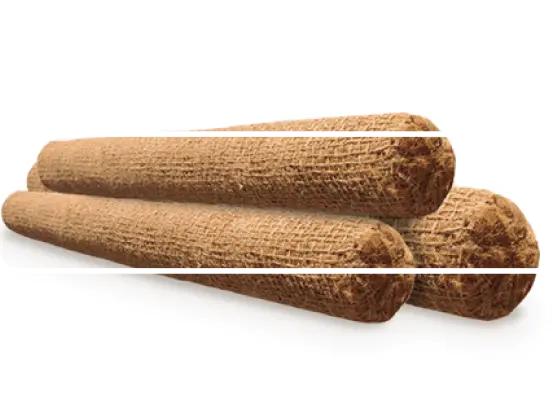
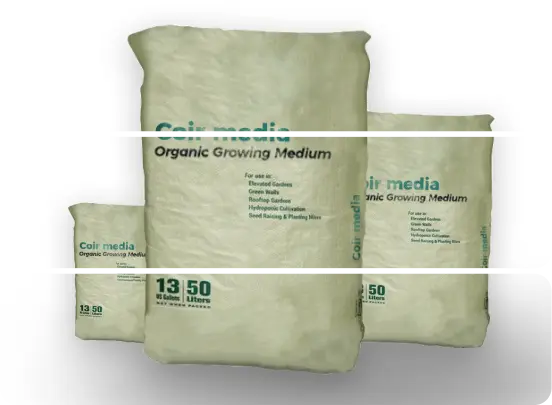
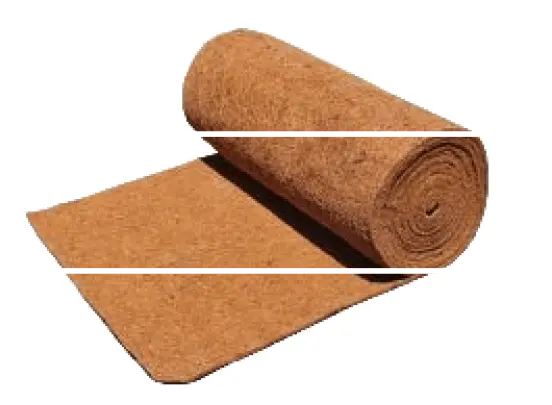
Coirmedia operates as a coir product manufacturer, focused on sustainable growing media for commercial horticulture. The company’s products — coco peat substrates, grow bags, greenhouse cultivation systems — aren’t just near the regenerative agriculture conversation, they’re right at the middle of it.
Here’s why. The regenerative farming movement is basically about lowering reliance on synthetic, fossil-fuel-derived inputs while still keeping, or improving, the conditions that help healthy plant growth. Coir-based growing media supports that objective pretty directly. Coco peat helps soil structure and water retention in a natural way, and it also supports microbial activity in the root zone. It cuts nutrient loss and improves nutrient uptake efficiency, so growers can push strong plant performance with lower fertiliser inputs. And in a moment when fertiliser prices are surging, the case for lower-input farming has never looked stronger; these aren’t small perks
Coirmedia’s position as a coir product manufacturer places it right inside the supply chain that regenerative and resource-efficient horticulture depends on. As European growers search for growing media that support healthier root systems, decrease their dependence on chemical-heavy inputs, and work reliably in both greenhouse and open-field contexts, coir substrates keep coming up as one of the most solid options out there.
One of the clearest links between the current crisis and coir-based growing systems is water and broader resource efficiency. Coir substrates hold moisture for longer than many conventional growing media, which means less frequent irrigation and lower energy costs related to water management. During a time when energy prices are high and cost control is not optional, efficiency has real financial weight.
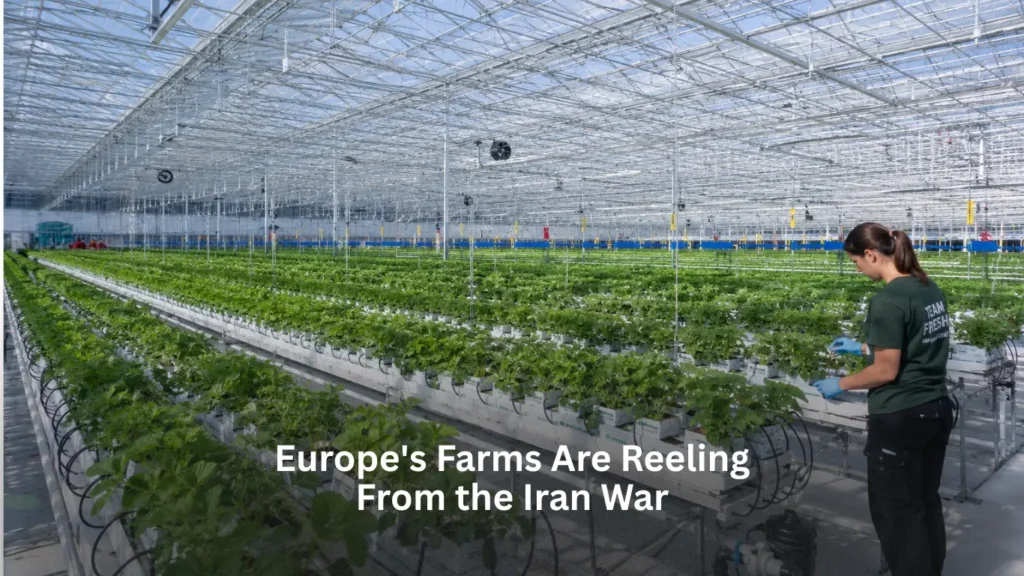
For greenhouse operators in particular, this becomes a big deal. Greenhouse horticulture is growing fast across Europe because controlled-environment farming delivers yield consistency and year-round production capacity, while climate-disrupted outdoor agriculture keeps struggling. But to run a greenhouse efficiently, you need growing media that optimises everything — water, nutrients, energy. Coir-based systems are built around that kind of efficiency. They reduce operational stress exactly when supply chains get disrupted, and when European farms are trying to navigate through it.
Coirmedia’s substrate solutions support that resource-efficient, lower-input cultivation approach. The company’s emphasis on manufacturing quality — precise EC and pH calibration, consistent particle structure, dependable performance across crop cycles — helps make sure the efficiency benefits of coir actually show up in commercial growing environments, not just on paper.
What the Euronews article describes isn’t some far-off future scenario. It’s already here. European farms are dealing with genuine financial pressure from the current crisis. Regenerative farmers who built resilience into their systems are clearly better positioned. And the wider industry is watching closely, drawing conclusions, and starting to make different input decisions, right now.
For growers evaluating their substrate and growing media choices, the direction of travel is clear. Lower-input systems. Sustainable growing media. Reduced dependency on synthetic fertilisers. Growing methods that build rather than deplete the conditions for long-term productivity. Coir-based solutions fit every one of those criteria — and Coirmedia, as an experienced coir product manufacturer serving commercial horticulture globally, is producing them at the scale and quality that serious growing operations require.
The farmers who saw this coming built systems that didn’t depend on cheap fertiliser and stable geopolitics. The growing media choices being made in greenhouses and substrate farms today are part of the same logic — building resilience into the foundation of how crops are grown, rather than hoping the supply chains that conventional farming depends on stay intact.
They won’t always. And the growers building for that reality are the ones Coirmedia is here to support.
Mathew is a product designer and engineer at Coirmedia, where he combines his passion for sustainability with his design and engineering expertise. He develops innovative coir products that are not only functional but also eco-friendly. Driven by a desire to share his knowledge, Neil is passionate about writing and teaching, aiming to educate others about his ideas, innovations, and the technology behind them.