Grow Bags vs. Dutch Buckets

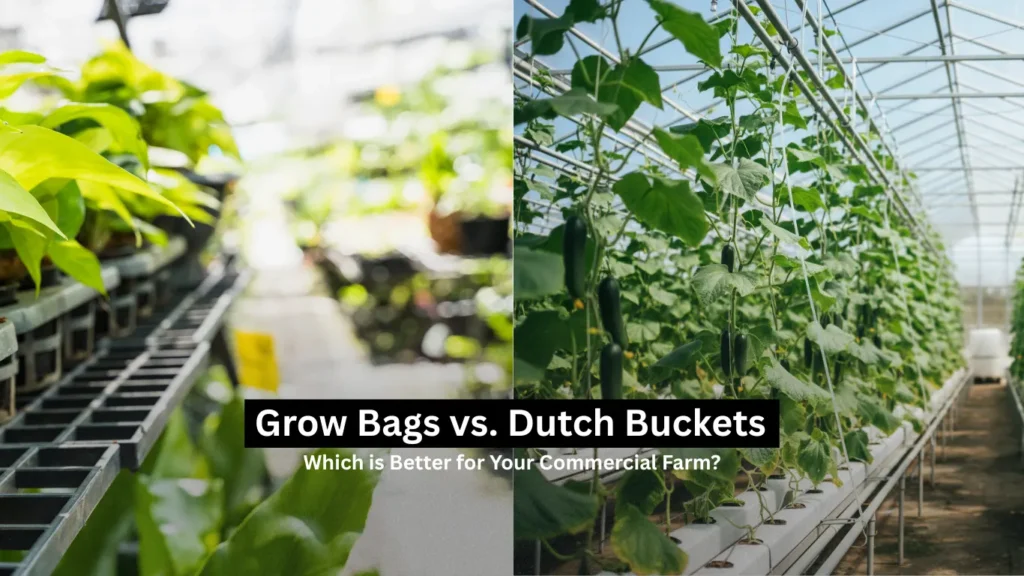
Grow Bags vs. Dutch Buckets: Which is Better for Your Commercial Farm?

Current agricultural practices face major changes because of new farming technologies that have led farmers to adopt hydroponic and substrate-based systems instead of traditional soil farming methods. The increasing scarcity of land, combined with rising water resource value, has made people more passionate about discussing which agricultural methods to use. For large-scale commercial producers, the choice usually boils down to two heavyweights: Grow Bags and Dutch Buckets (also known as Bato Buckets). Modern farming methods include both systems as essential components, which provide different benefits to farmers in their work and financial expenses and their crop growing results. The guide presents technical details of both systems to help you select the most suitable option for your business investment.

Understanding the Contenders

What are Dutch Buckets?

Dutch Buckets function as plastic containers that have a special siphon elbow located at their bottom section. This elbow allows the bucket to maintain a small reservoir of nutrient solution while draining the excess back into a central reservoir. The products serve their purpose when they operate together with inert media elements, which include perlite clay pebbles and volcanic rock.

What are Horticulture Grow Bags?

Horticulture Grow Bags are flexible containers that come ready for use because they already contain substrate materials that cannabis coir typically uses. The commercial hydroponics industry uses these products as either “slabs” or vertical bags, which function as plant growth containers that permit direct media contact with the plants.

  1. Capital Expenditure (CAPEX) and Initial Setup

When scaling to a commercial level, initial costs are a primary concern.

  • Dutch Buckets: These require a significant upfront investment. You must purchase the buckets, the specialised siphon elbows, and a complex network of PVC return pipes. Because the system relies on a recirculating “loop,” the plumbing must be installed with precise slopes to ensure gravity-fed drainage.
  • Grow Bags: These offer a much lower entry barrier. Because the bag serves as both the container and the medium, there is no need for specialised drainage plumbing. Growers often place bags on simple gutters or ground covers. For a Coir Products Supplier, the goal is to provide a “plug-and-play” solution that reduces the time and money spent on infrastructure.

Verdict: Grow bags win on initial cost-effectiveness.

  1. Media Management and Root Health

The “environment” provided to the roots is where these two systems differ most.

The Dutch Bucket Environment

In a Dutch Bucket system, the media is usually 100% inert (like perlite). This means the grower has total control over the nutrients. However, because perlite holds very little water, the system is high-risk. If a pump fails or a pipe clogs, the plants can wilt within hours.

The Grow Bag Environment

A Potting Mix bag or a coir grow bag provides a “buffer.” Coir has a high water-holding capacity while maintaining excellent air-filled porosity. Even if the irrigation system skips a cycle, the substrate holds enough moisture to keep the plant hydrated. This safety net is invaluable in commercial settings where equipment failure is an eventual reality.

  1. Crop Suitability: What are you growing?

The architecture of the plant often dictates the system.

  • Dutch Buckets: These are traditionally preferred by farmers who grow tomatoes and cucumbers because they need a solution to support their extended vining operations. The sturdy plastic material delivers optimal weight support for heavy plant growth. However, they perform poorly when used to cultivate smaller crops, which include strawberries and leafy greens.
  • Grow Bags: These are extremely adaptable products that serve multiple purposes. The industry standard for strawberry, raspberry and pepper cultivation has evolved to become the new tomato growing standard in contemporary greenhouse operations. The “slab” method enables growers to plant more closely together than they would with buckets.
  1. Labour and Operational Efficiency (OPEX)

In a commercial farm, labour is often the highest recurring cost.

  • Cleaning and Sterilisation: Between cycles, Dutch Buckets must be emptied, scrubbed, and chemically sterilised to prevent the spread of pathogens like Pythium. This is a labour-intensive, gruelling process.
  • Turnover Speed: Horticulture Grow Bags experience more rapid product turnover than any other product. After the crop cycle ends, workers remove the bag and install a new sterile bag to take its place.
  1. Drainage and Nutrient Recirculation
    The Rise of Agricultural Technology has made water conservation a top priority. 
  • Dutch Buckets: The design of Dutch Buckets allows them to function in closed systems. The siphon elbow system recirculates nutrient solution back into the system, which helps to conserve water but requires ongoing pH and EC level monitoring from the reservoir to maintain nutrient balance and prevent water-borne disease transmission.
  • Grow Bags: Grow bags that were previously used in drain-to-waste systems have now found a new application as drainage gutters that catch runoff for recycling purposes. The system delivers Dutch Bucket water-saving advantages alongside fresh substrate materials that filter out diseases.
  1. The Problem of Plastic Waste vs. Sustainability

Sustainability has become an important factor that influences commercial buyers when they make purchasing decisions. 

  • Dutch Buckets: The plastic buckets will serve for multiple years, but their production uses non-renewable petroleum materials. All plastic items that break or become unusable will end up as waste for the agricultural operation.
  • Grow Bags: The Dutch Buckets need to undergo complete emptying, scrubbing, and chemical sterilisation between their operational cycles because these procedures protect against Pythium pathogen transmission. This task requires multiple workers to perform a series of extremely difficult activities.
  1. Scalability and Flexibility

For a growing business, the ability to expand is crucial.

Dutch Buckets are “locked” into their plumbing. If you want to move a row or change the spacing, you have to cut and re-glue PVC pipes. Grow bags are modular. You can rearrange your greenhouse layout in a single afternoon simply by moving the bags and adjusting the drip emitters.

Why Grow Bags are the Future of Commercial Hydroponics

While Dutch Buckets have served the industry well for decades, the trend is clearly shifting toward substrate-based grow bags. The combination of lower upfront costs, reduced labour during crop turnover, and the safety buffer provided by coir media makes them the more resilient choice for a commercial business.

When you use a high-quality Potting Mix bag or coir slab, you are essentially buying “crop insurance.” You are protecting your plants from pump failures, reducing your risk of disease spread, and ensuring that your labour force is spent on plant care rather than scrubbing buckets.

Conclusion: The Professional Choice

The Grow Bag outperforms Dutch Buckets as its modern design enables commercial growers to achieve better production results. The solution delivers scalable agricultural technology through its sustainable high-performance system that meets global food market requirements. System efficiency depends entirely on substrate quality as the key element to assess your progress toward better operational performance.

Coirmedia stands out as a premier Coir Products Supplier, offering Horticulture Grow Bags that are specifically engineered for the rigours of hydroponic production.

Our grow bags provide:

  • Precision EC/pH Buffering: Ensuring your plants have immediate access to nutrients.
  • Optimal Air-to-Water Ratios: Preventing root rot while maximising growth speed.
  • UV-Stabilised Longevity: Ensuring the bags hold up under intense greenhouse lights.

For growers who demand the best from their Modern Techniques of Farming, the grow bags from Coirmedia are the perfect partner for your hydroponic journey. Whether you are scaling a tomato facility or starting a vertical strawberry farm, our coir solutions provide the foundation for a golden harvest

Picture of Mathew Trevor

Mathew Trevor

Mathew is a product designer and engineer at Coirmedia, where he combines his passion for sustainability with his design and engineering expertise. He develops innovative coir products that are not only functional but also eco-friendly. Driven by a desire to share his knowledge, Neil is passionate about writing and teaching, aiming to educate others about his ideas, innovations, and the technology behind them.
Download Brochure

Coir logs

coco coir by coir media
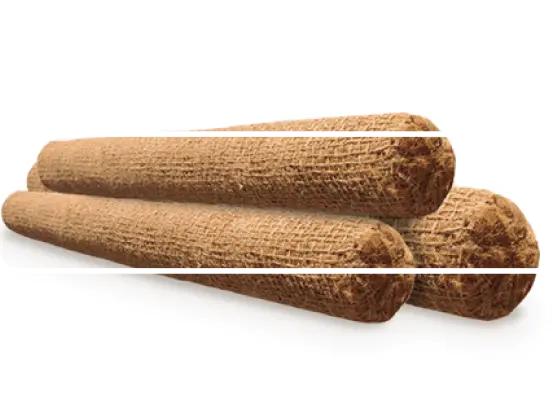
Coco coir logs are popular material choices for use in construction zones, restoration areas, for environmental preservation on hillsides, or for aquatic erosion control. Coir logs are strong enough to withstand weather conditions such as heavy rains and, when staked to a hillside, help prevent soil slippage by holding the water until the sediment settles.Coir logs can last anywhere from two to five years. Coir logs do not need to be removed at the end of their life cycle, as coir logs break down naturally into the soil, providing nutrients to the ecosystem in the process

weeds mat

organic growing medium by coir media
Coir Weed Mats are the best solution to prevent the growth of weeds. It stops the supply of sunlight to weeds. Coir Mats are made from coconut coir fibre and natural latex. They are a completely natural weed deterrent used to cover the soil around the base. Coir Weed mats are manufactured with the use of needle-punched technology using mattress coir with natural latex.Coir mulch mat can be used anywhere for the control of weeds around a newly planted sapling. The Coir mulch cuts the supply of sunlight to the ground and prevents the growth of slugs and also helps in maintaining soil humidity. It protects plant roots from damage that can be caused by weeds.

needle felt mat

needle flat mat by coir media
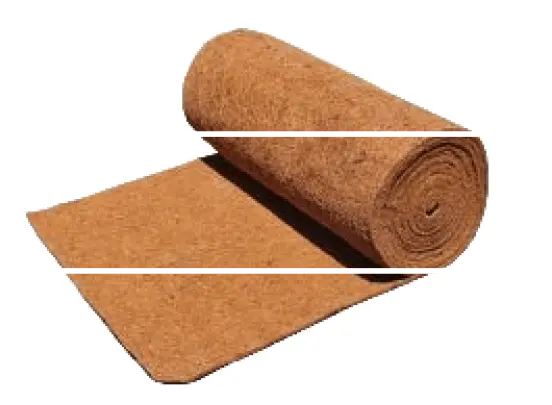
Coir needled felt mats are non-woven mats made from 100% coir fibre. The fibre is selected, dried, and then weaved in the needle felt.Needle punching is one of the methods used for making a nonwoven felt. This involves taking loose fibres and “needling” them together using a needle loom full of barbed needles to force the fiber to push through and entangle itself.Coir needle felt is a non-woven fabric made from decorticated coir fibre. The coir needle felt has a number of applications in the value addition of coir.

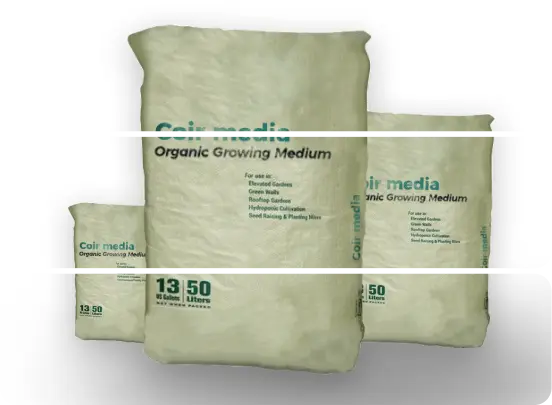
50 litres bags

organic growing medium by coir media
A marvelous plant growth medium in coir, Coco 50-liter bag loose form is a 100% organic substrate manufactured by us. The World’s finest Coco 50 liter Coir, Medium During the production process, the quality is 100% for plantation.It is free from pesticides, Coco Coir growing medium is an indoor gardening essential. grower looking for fast-growing plants, Coco Peat 50 liter Bag is easy to handle, It includes free drainage and airflow system, 50-litre bags of coco pith are not compressed, it is ready for use.