For decades, if you said “European agriculture,” France came to mind first. Wine. Cereals. Spirits. A proud tradition of feeding a continent and exporting its finest products to the world. But something has been quietly shifting — and if you’re a grower, a greenhouse operator, or anyone involved in modern horticulture, this shift matters more than you might think.
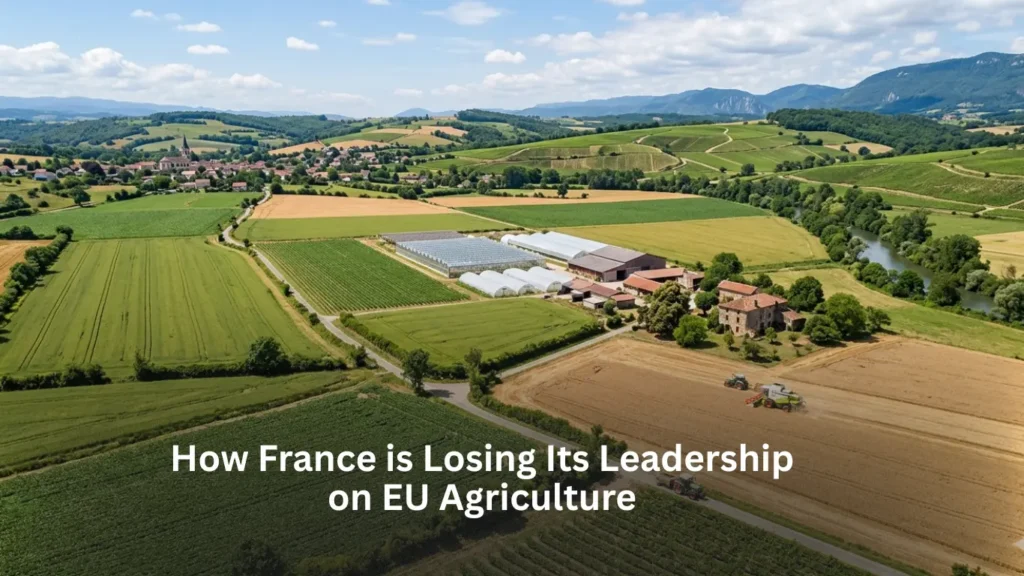
A recent analysis by Euractiv laid it out plainly: France is losing its grip on EU agricultural leadership. And the reasons behind that slide tell us a lot about where farming is heading — not just in Europe, but globally.
France built its agricultural identity on premium products and export markets — particularly wine, spirits, and cereals sold to the United States and China. That worked brilliantly for a long time, but then when geopolitical tensions kind of flared up, and tariffs hit , those revenues fell off sharply. France had put too many eggs into one really elegant, premium label basket, and yeah, it looked great at first.
But here’s the part that doesn’t really get talked about enough, or at least not in the same breath. France also failed to adapt to how people actually want to eat now. Folks want convenient food, affordable food, and they want it all year round. Traditional agriculture just doesn’t always deliver that, not in the way customers expect it today. Meanwhile, Spain, Italy, and Poland quietly modernised — building stronger export infrastructure, integrating technology into their farming operations, and leaning into controlled-environment agriculture. The result? Higher productivity, consistent supply, and prices that France couldn’t match.
This isn’t just a French story. It’s a signal for the entire industry.
Ageing farming workforces, degrading soil quality, climate instability, rising input costs — these aren’t problems unique to one country. There are structural challenges pressing down on traditional agriculture everywhere. And the response the industry is converging on is consistent: greenhouse horticulture, soilless cultivation, precision farming, and sustainable growing systems that reduce dependence on land, water, and chemicals.
This is where Coirmedia comes in — not as a sideline supplier, but as a core enabler of this transition.
Coirmedia is a leading coir product manufacturer with decades of experience producing high-performance coir-based growing systems for commercial growers worldwide. The company’s products are built specifically for the kind of modern, efficient, substrate-based cultivation that European and global horticulture is rapidly moving toward. When growers need to produce more per square meter, maintain year-round output, and do it sustainably, Coirmedia’s solutions are designed exactly for that.
Let’s talk about what greenhouse and soilless growers actually need from a substrate. Excellent root aeration. Consistent water retention without waterlogging. Resistance to soil-borne disease. Compatibility with automated drip irrigation. Ideally, a material that’s sustainable, renewable, and won’t put them on the wrong side of tightening EU environmental regulations.
Coir checks every one of those boxes — and Coirmedia has spent years refining how that material is processed, buffered, and engineered into products that perform reliably at commercial scale.
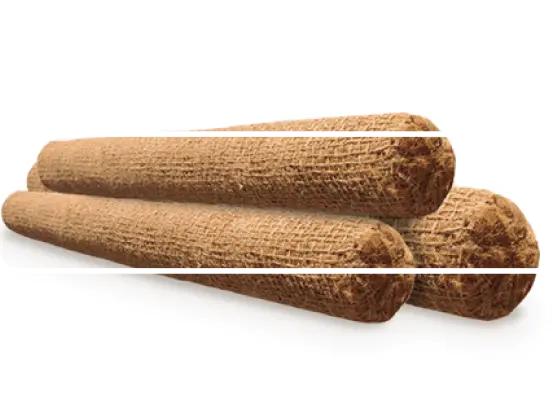
Take the coir grow bags Coirmedia produces. These are the backbone of modern tomato, cucumber, pepper, and berry cultivation in controlled-environment systems. A well-made grow bag delivers a consistent root environment across the entire crop cycle, supports uniform irrigation, and minimizes the kind of variability that costs growers yield. Coirmedia’s grow bags are manufactured with precise EC and pH levels, carefully controlled coir particle structure, and consistent compression ratios — because in commercial horticulture, consistency isn’t a nice-to-have. It’s the difference between a profitable season and a difficult one.
Strawberry cultivation is one of the fastest-growing segments in European protected horticulture right now. Consumers want premium fresh strawberries year-round. Retailers want a reliable supply. Growers want high yields from limited greenhouse space. Strawberry grow bags make all of that possible — and Coirmedia has developed its strawberry substrate products specifically around the crop’s root characteristics and irrigation requirements.
Growing strawberries in substrate systems allows growers to control nutrition precisely, reduce the risk of fungal diseases that plague soil-grown crops, and run multiple growing cycles within a single season. Coirmedia’s strawberry grow bags support that kind of intensive, high-value production without compromising on the root health that determines fruit quality.
For blueberries, figs, and other high-value crops that require specific root zone pH and drainage conditions, Coirmedia’s open top bags offer a flexible, effective solution. These aren’t generic containers — they’re engineered to provide the right balance of drainage and moisture retention for crops that are notoriously sensitive to root zone conditions.
As European growers push further into premium berry production in greenhouse and polytunnel systems, open-top bags are becoming a standard tool in the setup. Coirmedia produces these with the same quality consistency it applies across its entire product range.
There’s another dimension to what’s going on here that’s worth getting a grip on , because it’s easy to miss the bigger picture. The European Union has actually committed to phasing out peat in horticultural growing media by 2030, and everybody in the sector knows it, like pretty much already. Peat bogs work as carbon sinks— but when you harvest them, you end up releasing carbon that was stored for a very long time, and you also break apart delicate ecosystems that took thousands of years to form. The regulatory direction is firm, so the industry has to work with that reality rather than around it.
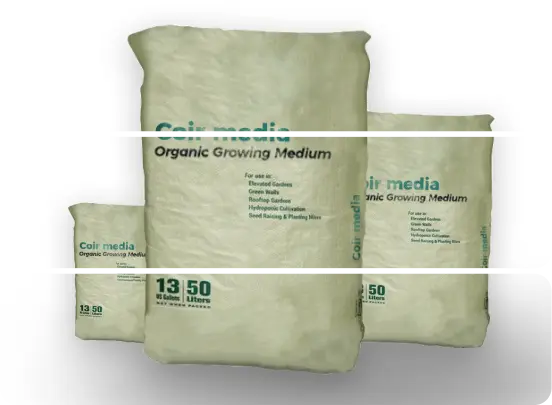
Now, about the substitute, coco peat (the fine coir material from coconut husks ) comes up again and again, because it’s one of the most practical and scalable replacement options that are available today. It’s basically a byproduct of the coconut industry, so it’s renewable, and it also helps reduce agricultural waste. And importantly, its production doesn’t involve the same kind of ecosystem destruction that peat extraction does. Coirmedia, as a specialist coir product manufacturer, is therefore placed right at the centre of that transition, not just “along for the ride”.
The products it makes today are precisely what European horticulture will rely on as peat-based media are phased out.
The modern techniques of farming that are gaining ground globally — hydroponics, NFT systems, bag culture, precision drip irrigation — all require a growing medium that can perform consistently in engineered environments. Soil can’t do that reliably. Peat is being regulated out. Rockwool works but comes with disposal challenges and a high carbon footprint. Coir, properly manufactured and processed, delivers the performance modern growing systems need with a sustainability profile that holds up to scrutiny.
Coirmedia’s manufacturing approach reflects this. The company applies rigorous quality controls to its coir substrate products — washing, buffering, and testing to ensure that every bag or block leaving its facility delivers what the grower needs without the variability that can undermine a carefully managed crop system.
If you’re running a commercial greenhouse operation, the broader agricultural shifts described above aren’t abstract. They’re the context in which every input decision you make sits. Moving toward substrate-based cultivation isn’t just a technical upgrade — it’s an alignment with where the market, regulation, and consumer demand are all pointing simultaneously.
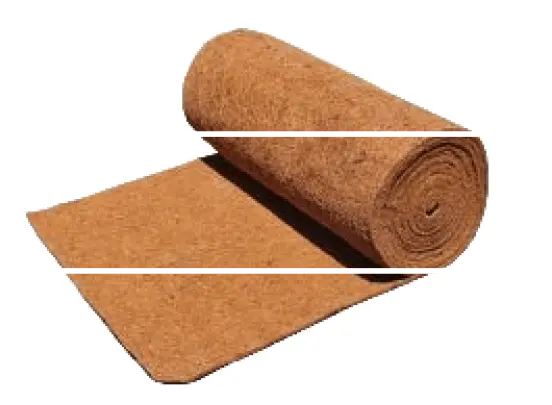
Coirmedia’s range of coir grow bags, open top bags, strawberry grow bags, and coco peat substrates gives growers the tools to make that transition practically and confidently. Whether you’re scaling an existing greenhouse operation, transitioning away from soil cultivation, or building a new protected horticulture system from the ground up, the substrate decisions you make early determine a great deal of what’s possible later.
France’s agricultural challenge is ultimately a story about what happens when an industry holds onto the past longer than the market allows. The growers and operations that will define European and global horticulture over the next 20 years are the ones building modern systems today — with the right substrates, the right infrastructure, and the right supply partners.
Coirmedia is built to be that partner.

Mathew is a product designer and engineer at Coirmedia, where he combines his passion for sustainability with his design and engineering expertise. He develops innovative coir products that are not only functional but also eco-friendly. Driven by a desire to share his knowledge, Neil is passionate about writing and teaching, aiming to educate others about his ideas, innovations, and the technology behind them.