How to Plan for Bell Pepper Season in Morocco

How to Plan for Bell Pepper Season in Morocco?

Farmers spread bright crimson capsicums across rooftops and courtyards, turning entire villages into living carpets of colour. Morocco produces more red peppers than any other African country, and places like Fquih Ben Salah province are the beating heart of it all. Yet behind the postcard scenes lie months of careful planning, because a single missed detail can wipe out a whole year’s income. This guide walks through exactly how to plan for Bell pepper season in Morocco, from seed to export crate, so the next harvest becomes the best one yet.

The season runs like clockwork: planting starts in February–March, transplanting in April–May, first pick in July, peak harvest in August–September, drying and processing through October. Get the timing wrong and drought, heat, or market gluts punish hard. Here’s everything needed to stay ahead.

Key Aspects of Bell Pepper Season in Morocco

  1. Timing is Everything. The classic bell pepper planting season begins in heated nurseries in late January for early crops, or open-field sowing in March for the main season. Seedlings need 6–8 weeks before moving outside. Farmers in Beni Mellal-Khénifra and Casablanca-Settat regions aim for transplant when night temperatures stay above 15 °C, usually mid-April. Too early and cold snaps stunt plants; too late and August heat cooks flowers before fruit sets.
  2. Variety Choice Drives Profit Local heirlooms like “Nefzaoui” and “Baklali” still dominate village fields for their thick walls and deep colour when dried. Modern hybrids – Yolo Wonder, California Wonder, Red Knight, and the blocky Aristotle – give heavier yields and better disease resistance for export markets. Spanish buyers want long, thin “Lamuyo” types for powder; Algerians prefer round, meaty fruits for grilling. Plant a mix: 70 % local for tradition, 30 % hybrid for cash.
  3. Soil and Water Rule Survival Moroccan soils swing from sandy loam in the north to heavy clay around Marrakech. Bell peppers hate waterlogged roots. Raised beds 20 cm high solve drainage problems quickly. pH should sit 6.0–6.8. Most farmers add well-rotted manure plus NPK 15-15-15 at planting. Drip irrigation is no longer a luxury – one dry week in June cuts the yield 40 %. Mulching with black plastic or straw keeps soil cool and cuts evaporation.
  4. Drying Infrastructure Matters More Than the Field Harvest is only half the job. Villages that built concrete drying terraces with shade nets now finish in one sunny day instead of three cloudy ones. Simple wire-mesh tables raised 80 cm off the ground stop dogs and dust. A 500 m² terrace dries 4 tonnes at once – critical when every farmer harvests the same week.

Benefits That Keep Families Planting Year After Year

A single hectare of good bell peppers brings 25–35 tonnes fresh, worth 300,000–450,000 MAD at farm gate. After drying, 6–8 tonnes of finished product fetch 80–120 MAD per kilo exported. Half the crop leaves for Spain and Algeria before December, meaning money hits bank accounts before Christmas debts pile up.

Two Products from One Harvest

Fresh green bells sell to Rabat hotels in July. Red-ripe fruits dry into the famous Moroccan paprika that flavours harira and tagine worldwide. No waste, double income.

Women-Led Cooperatives Thrive

In Oulad Ali Loued, the women’s cooperative sorts, grinds, and packages powder. Members earn 350 MAD per day during peak season – life-changing money in villages where teaching jobs pay less.

Drought-Resistant Compared to Tomatoes

Bell peppers drop flowers above 35 °C, but local varieties recover faster than tomatoes. Deep roots pull water others can’t reach. Smart farmers plant after wheat or barley to use residual moisture.

Challenges That Can Derail an Entire Season

Six years of below-average rain have shrunk dams and raised irrigation costs. Boreholes now cost 6 MAD per hour to run. Farmers who installed drip ten years ago laugh; those still flood-irrigate cry.

  • Heat Waves That Sterilize Flowers

July 2024 hit 48 °C in Marrakech. Entire blocks set zero fruit for three weeks. Shade nets (50 %) and kaolin clay sprays are the only cheap fixes. Market Crash When Everyone Harvests Together

  • Pests That Love Dense Canopies

Aphids spread the virus in nursery trays. Spider mites explode in dry heat. Thrips scar fruit and make export buyers reject whole loads. Weekly soap-and-oil sprays work if scouts catch them early.

Step-by-Step Plan to Nail Bell Pepper Season in Morocco

Step 1 – January: Book Seeds and Prepare Nursery

Order certified seed from Spain or local stations. Treat with hot water (50 °C, 25 min) to kill the virus. Sow in 128-cell trays filled with fine coir. As a reliable coir product supplier in Morocco, Coirmedia now delivers pre-buffered seedling mix direct to Beni Mellal farms – no more salt burn disasters.

Step 2 – February: Build Shade and Harden Seedlings

Move trays under 50 % shade net. Water twice daily with half-strength fertiliser. Prick out weak seedlings ruthlessly – crowded trays breed fungus.

Step 3 – March: Test Soil and Form Beds

Send samples to INRA lab in Meknès (costs 300 MAD). Add sulfur if pH above 7.0. Plough 30 cm deep, mix 20 tonnes manure per hectare. Form raised beds 1 m wide, 30 cm paths.

Step 4 – April: Transplant at the Perfect Moment

Wait for soil temperature 18 °C at 10 cm depth. Plant 40 cm apart in double rows, 1.2 m between bed centres – that’s 33,000 plants per hectare. Drip tape down the middle, one emitter every 20 cm.

Step 5 – May: Mulch and First Fertiliser

Cover soil with black plastic or straw. Side-dress 200 kg/ha ammonium sulfate. Install shade nets on bamboo frames if budget allows.

Step 6 – June: Scout Like Your Life Depends on It

Walk fields every morning. Yellow sticky traps catch thrips. Blue traps catch whitefly. Spray neem oil the moment counts rise. Release predatory bugs if you run organic.

Step 7 – July: First Green Harvest

Pick immature green bells for local souks. Price jumps to 12 MAD/kg early season. Leave red-ripe fruits on the plant for drying crop.

Step 8 – August: Peak Red Harvest

Harvest daily before 10 am. Spread immediately on drying terraces. Turn twice a day. One sunny day, finish the job. Cloudy spells mean three days and a risk of mould.

Step 9 – September: Move to Cooperative

Load dried peppers into clean sacks. Women sort by colour and size. Grinding machines run night shifts to keep up. Pack 25 kg export bags with moisture below 10 %.

Step 10 – October: Sell Before Prices Tank

Spanish buyers arrive with trucks. Algerian orders come by phone. Keep 500 kg of powder in stock for the Ramadan spike in November.

Bonus Tips From Farmers Who Never Miss a Season

  • Plant a strip of marigolds every 10 rows – confuses thrips.
  • Save the best dried pods for seed next year – free and already adapted.
  • Use Aubergine grow bag technology for off-season trials; the same 25-litre bags work brilliantly for bell peppers in plastic tunnels and give 15–18 kg per plant.
  • Join the local cooperative before planting – they negotiate export prices together.
  • Keep one rainwater tank – even 10,000 litres saves a fortune when pumps fail.

New Trends Changing the Game

Solar pumps now cost less than diesel over five years.

Israeli drip companies opened offices in Meknès – spare parts arrive in 48 hours.

Mobile apps predict heat waves three days early.

The Bottom Line

How to plan for Bell pepper season in Morocco comes down to three words: start early, control water, sell smart. Drought isn’t going away, but farmers who switched to drip, shade nets, and cooperatives doubled their income in three years. Villages that still flood-irrigate and dry on the ground struggle to break even.

The August smell of drying peppers isn’t just tradition – it’s money drying in the sun. Plan properly and that smell becomes school fees, new motorbikes, and daughters who never have to leave home to work in Casablanca factories.

Seedlings are already in trays across the country. The next Bell pepper season in Morocco starts now. Get the soil ready, book the coir, line up the buyers. Come August, those red carpets will pay for every drop of sweat.

Picture of Mathew Trevor

Mathew Trevor

Mathew is a product designer and engineer at Coirmedia, where he combines his passion for sustainability with his design and engineering expertise. He develops innovative coir products that are not only functional but also eco-friendly. Driven by a desire to share his knowledge, Neil is passionate about writing and teaching, aiming to educate others about his ideas, innovations, and the technology behind them.
Download Brochure

Coir logs

coco coir by coir media
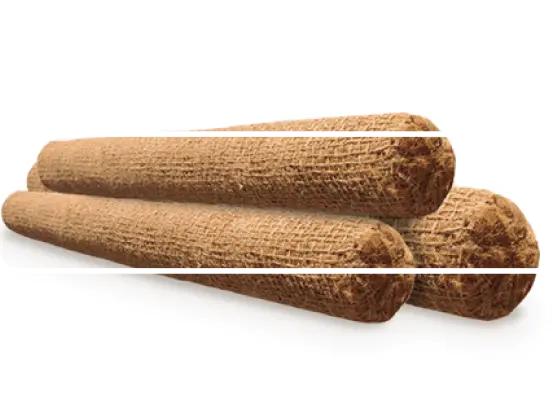
Coco coir logs are popular material choices for use in construction zones, restoration areas, for environmental preservation on hillsides, or for aquatic erosion control. Coir logs are strong enough to withstand weather conditions such as heavy rains and, when staked to a hillside, help prevent soil slippage by holding the water until the sediment settles.Coir logs can last anywhere from two to five years. Coir logs do not need to be removed at the end of their life cycle, as coir logs break down naturally into the soil, providing nutrients to the ecosystem in the process

weeds mat

organic growing medium by coir media
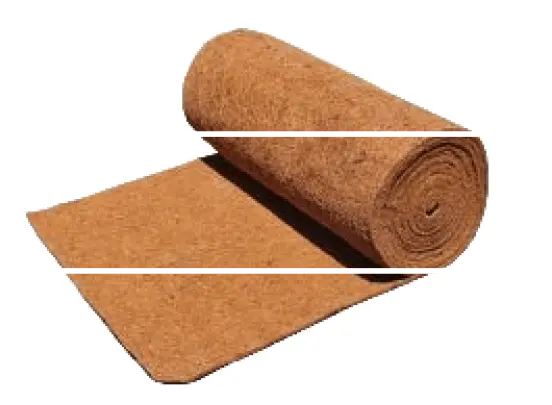
Coir Weed Mats are the best solution to prevent the growth of weeds. It stops the supply of sunlight to weeds. Coir Mats are made from coconut coir fibre and natural latex. They are a completely natural weed deterrent used to cover the soil around the base. Coir Weed mats are manufactured with the use of needle-punched technology using mattress coir with natural latex.Coir mulch mat can be used anywhere for the control of weeds around a newly planted sapling. The Coir mulch cuts the supply of sunlight to the ground and prevents the growth of slugs and also helps in maintaining soil humidity. It protects plant roots from damage that can be caused by weeds.

needle felt mat

needle flat mat by coir media
Coir needled felt mats are non-woven mats made from 100% coir fibre. The fibre is selected, dried, and then weaved in the needle felt.Needle punching is one of the methods used for making a nonwoven felt. This involves taking loose fibres and “needling” them together using a needle loom full of barbed needles to force the fiber to push through and entangle itself.Coir needle felt is a non-woven fabric made from decorticated coir fibre. The coir needle felt has a number of applications in the value addition of coir.

50 litres bags

organic growing medium by coir media
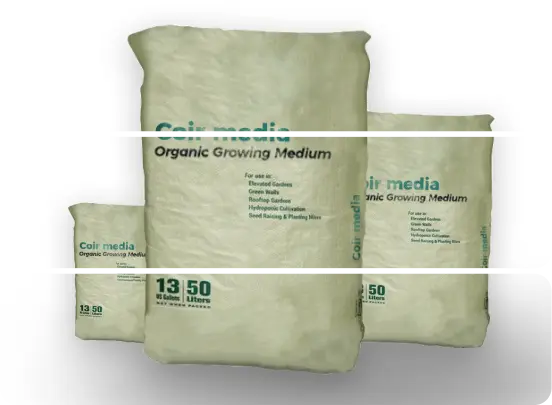
A marvelous plant growth medium in coir, Coco 50-liter bag loose form is a 100% organic substrate manufactured by us. The World’s finest Coco 50 liter Coir, Medium During the production process, the quality is 100% for plantation.It is free from pesticides, Coco Coir growing medium is an indoor gardening essential. grower looking for fast-growing plants, Coco Peat 50 liter Bag is easy to handle, It includes free drainage and airflow system, 50-litre bags of coco pith are not compressed, it is ready for use.